




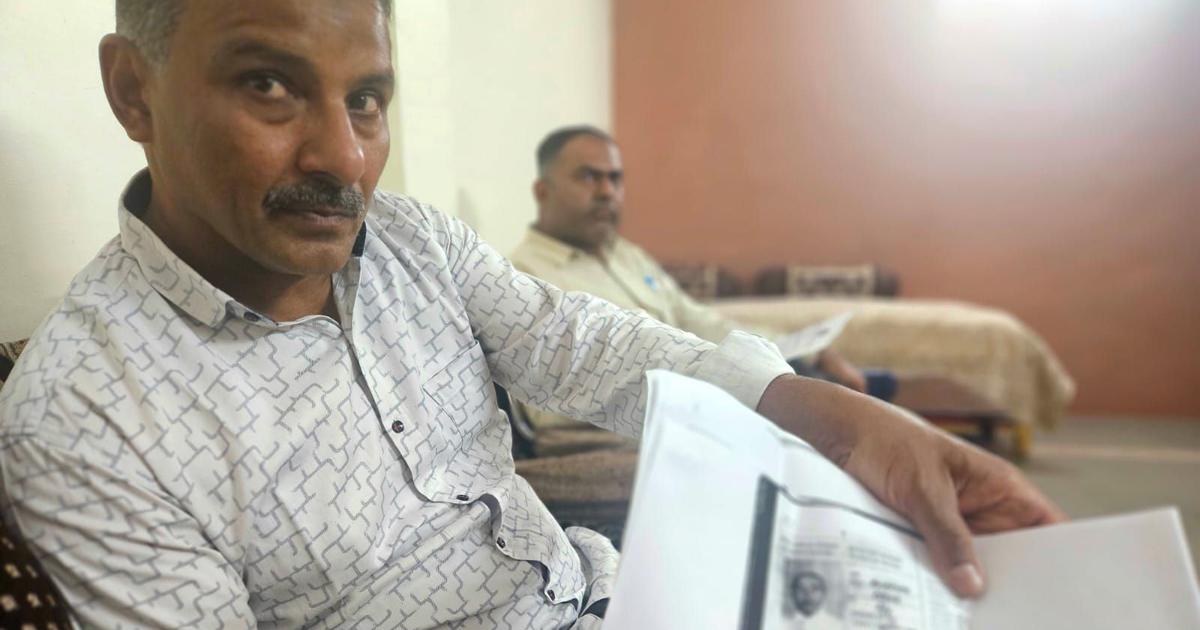
Fakir Mohamed was born in 1945 in his home in Indore, Madhya Pradesh, two years before India got freedom from British rule.
Over the decades, he has seen his neighbourhood of Bijalpur transform from large swathes of agricultural fields into a bustling urban space.
The 81-year-old can reel off names of Members of Parliament who have represented Indore over the past few decades. He has cast his vote in all the Lok Sabha elections held since he came of age. “I have not missed even one in 60 years,” he said.
Imagine his surprise, then, when he found that an application had been filed, seeking to strike his name off the electoral roll on the grounds that he was not an Indian citizen.
Initially, he was amused. “I have never once stepped out of India in my whole life,” Mohamed said.
But when he realised that at least 53 people from his colony had objections against their name, his concern grew.
They were all Muslim.
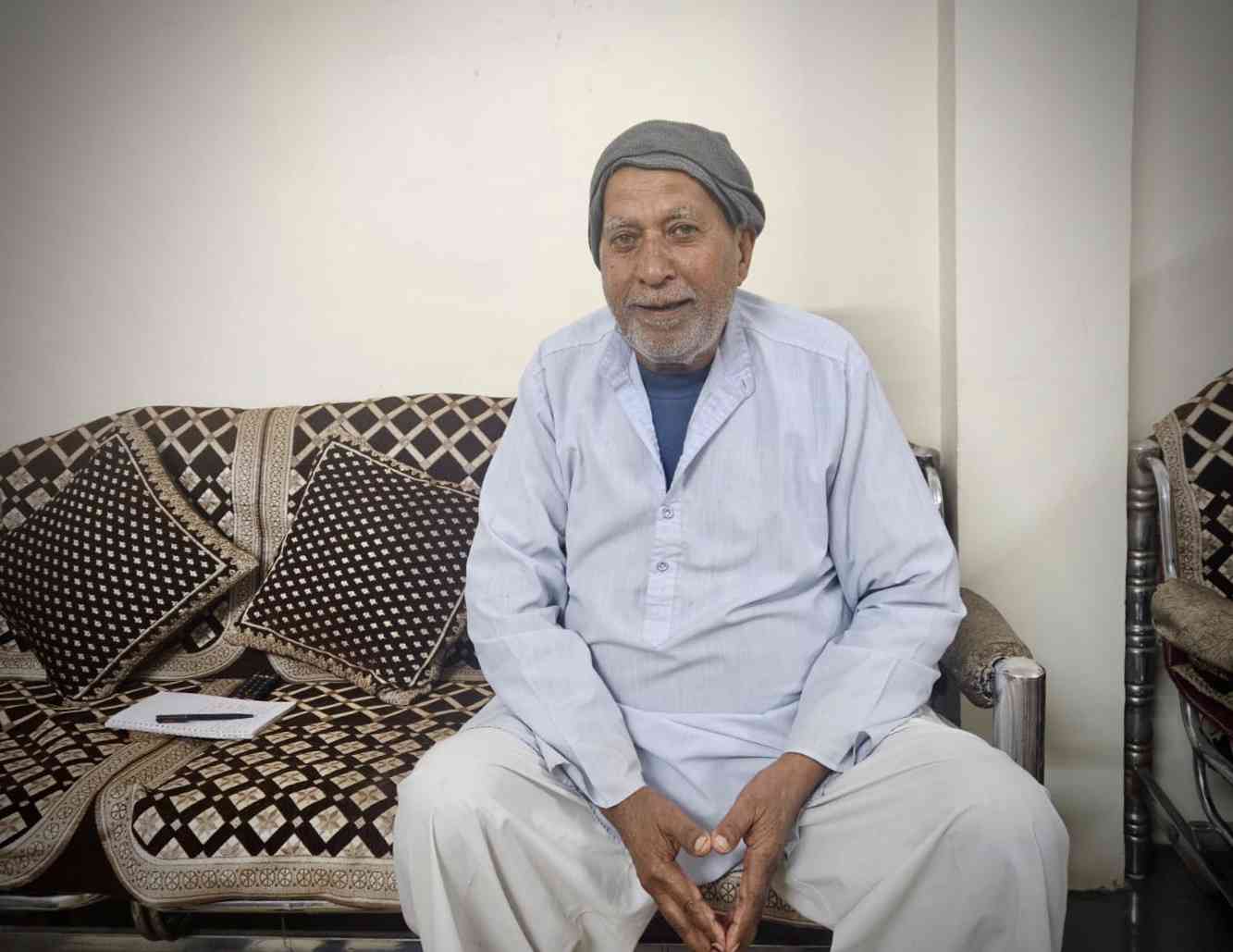
“Ye kaisa mazaak hai?” he asked. What kind of a joke is this?
“How can anyone decide that I can no longer vote?” he said, producing a list of documents, including land records from 1961 as proof.
Mohamed is not the only one whose right to vote has been called into question.
Across Indore, bulk objections have been filed against thousands of voters, as part of the special intensive revision of the electoral roll carried out in several Indian states by the Election Commission. A majority of objections have been filed against Muslim voters, booth level officers, residents and local corporators told Scroll.
Several of the complaints against Muslim voters have been filed by workers of the Bharatiya Janata Party, a pattern that has been seen in Assam, Gujarat and Rajasthan. Rafique Khan, a former corporator, said, “This seems to be a systematic attempt to cut Muslim votes.”
Scroll contacted at least seven people who filed bulk objections against Muslim voters. Six said they work for the BJP.
The Form 7 route
Towards the end of January, the Election Commission had called for objections and revisions to the draft list of voters it had published after a door-to-door mapping. Days before the deadline to submit objections, booth level officers in certain areas of Indore began to receive bulk complaints against voters.
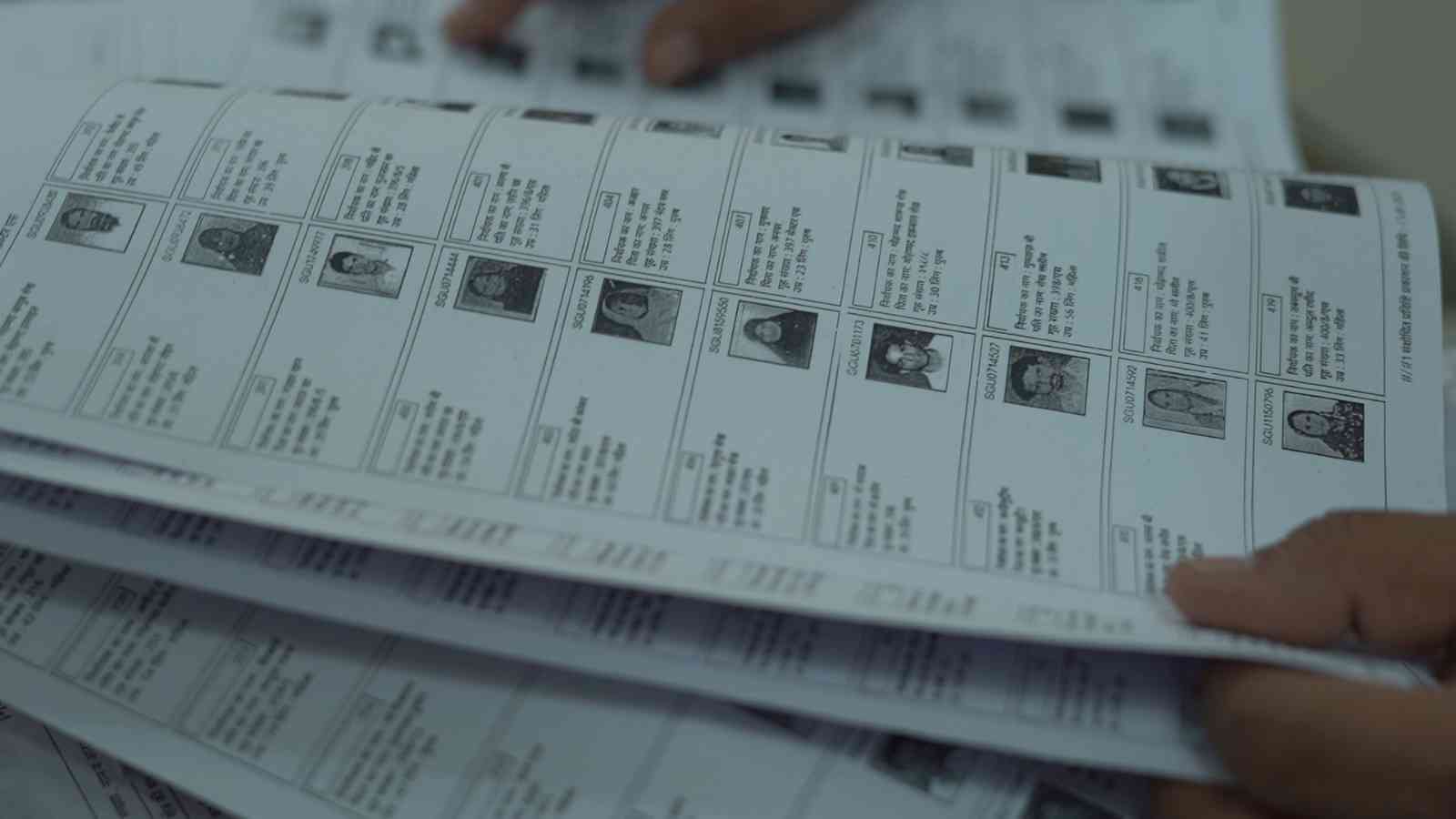
The complaints were filed under Form 7, which allows a voter to seek the deletion of another voter’s name from the electoral roll if she has permanently shifted, died, enrolled in some other booth, or is not an Indian citizen.
Until 2022, such an objection could be filed only by a voter of the same booth or a booth level officer. But an amendment in rules that year expanded the ambit of Form 7 applications and allowed anyone from the same Assembly constituency to file it.
According to Election Commission rules, a voter can submit any number of objections. But if a person files more than five objections, an electoral registration officer must review the complaints individually.
Across eight Assembly seats that make up the Indore parliamentary seat, so far 11,682 applications under Form 7 have been uploaded, data on the Election Commission of India website shows. But Scroll found that the actual count of Form 7 applications is likely to be higher than 50,000. Many applications received offline are yet to be uploaded by booth level officers.
“The Form 7 applications are mostly being filed against Muslim voters,” said Abdul Wasim Rajawat, district coordinator of Congress for the special intensive revision. “Hindu voters have not complained about being called to hearings.”
Rajawat alleged that in most cases, BJP workers were seeking mass deletion of voters. “The form carries the name and EPIC [Electors Photo Identity Card] number of the complainant,” Rajawat said. “When we traced these complainants, we found they were attached with BJP When we traced these complainants, we found they were attached with BJP.”
For example, the person who filed a complaint against Mohamed is Mahendra Bhatia, who admitted to Scroll that he works with the BJP.
When we asked why he had filed multiple applications under Form 7, Bhatia said, “There are infiltrators in our country who enrolled themselves as voters.” He added, “We need to remove them.”
Was he personally able to verify the citizenship of people who he had challenged under Form 7? He said that The matter “is under investigation”. Bhatia did not respond to Scroll after that call.
Three BJP workers, including Bhatia, have filed complaints against 53 Muslim voters in Bijalpur.
Rajawat alleged that Muslim names have been randomly shortlisted by BJP workers and objections filed against them without verification. For instance, Fakir Mohamed’s name was included in the last special intensive revision held in the state in 2002-’03, which automatically qualifies him to be included in the 2026 electoral roll.
“Such fake unverified applications can attract imprisonment for a year,” Rajawat said. “We want the Election Commission to act against the complainants.”
Indore BJP spokesperson Sumit Mishra denied these allegations.
On January 30, the MP Congress president Jitu Patwari visited Rajendra Nagar police station to register a complaint against the three BJP workers, who had challenged the voters in Bijalpur. All 53 voters were verified to be Indian citizens, booth level officer Navin Tiwari told Scroll. However, the police have not yet registered an FIR.
Pradeep Kumar Yadav, senior inspector at Rajendra Nagar police, said the police recorded statements of the booth level officer, and the three BJP workers. “We will have to discuss with higher authorities if a case has to be registered,” Yadav told Scroll.
Deputy district election officer, Navjivan Pawar, told Scroll that “if a Form 7 application is submitted, then due validation of the voter has to be done”. But Pawar did not comment on whether action against fraudulent complainants would be taken under Section 31 of Representation of the People Act, 1950, which could lead to imprisonment up to one year.
‘Never before have we seen this’
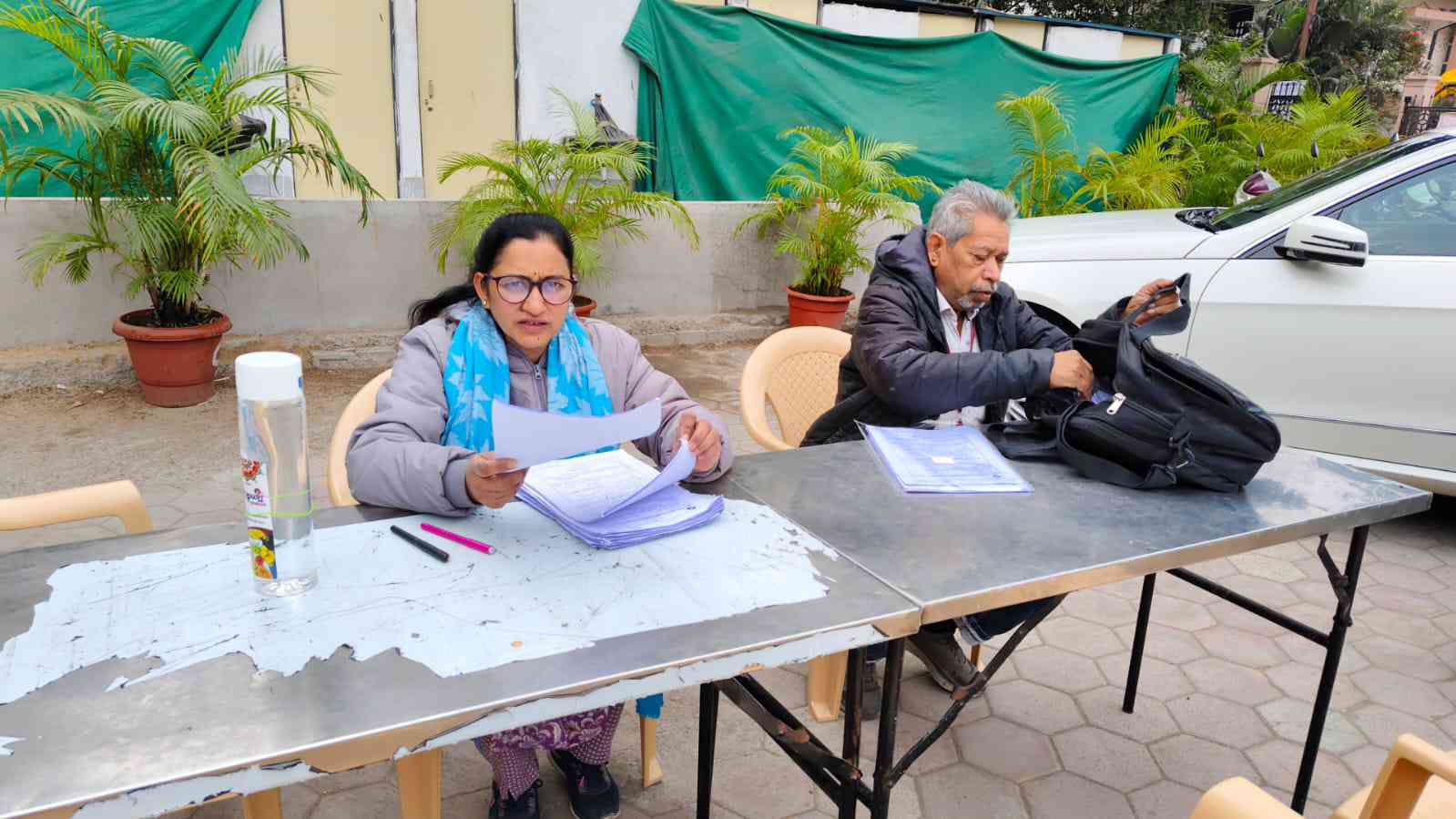
Across Muslim neighbourhoods, Scroll found that bulk objections have been filed against voters, alleging that they had shifted or were not Indian citizens.
Rafiq Khan, the former corporator from Chandan Nagar, said he contacted 22 booth level officers in his area and asked for information on the objections they had received. “We found out that over 5,000 of the 16,000 voters in my ward have Form 7 objections filed against them. They are all Muslims,” Khan said.
A similar pattern was seen in Khajrana, one of the densest Muslim ghettos in Indore.
In one ward in Khajrana, Form 7 objections were filed against 7,000 of 40,000 Muslim voters, seeking the deletion of their names from the electoral roll, corporator Rubina Iqbal told Scroll.
An objection was even filed against her husband Iqbal Khan, who had contested the Assembly elections from Indore in 1990.
“It is ridiculous that a Form 7 has been filed against my father. He has always lived here,” said Shahnawaz Khan, Khan’s son. “We found that from every house, one or two Muslim voters have received an objection against their name. The ones filing these applications don’t even reside in the same booth or colony.”
In another ward, corporator Sadiq Khan said of the 11,000 Muslim voters in his ward, over half – 7,000 voters – have a Form 7 objection against their name. “Most of the forms have raised fake concerns that the voter does not live at the address,” Khan said.
In a meeting with the collector, he pushed for registering FIR against those who have submitted such applications, Sadiq Khan told Scroll.
For booth level officers, the bulk applications have added to an already intense workload. Reshma Khan, a booth level officer, said she received 350 objections. “I had to physically verify each voter and collect their documents again,” she told Scroll. “In more than 90% of forms, the allegation that the voter does not live at the address was fake.”
Shaheena Khan, another booth level officer, said Form 7 objections were submitted against 240 of the 533 voters in her booth – on a single day. Khan found that the claim on all forms that the voters had moved out was untrue. “Never before have we seen such big numbers of Form 7 applications submitted, that too by residents from another booth and another ward,” she said.
The complainants
Scroll found that in several cases, Form 7 applications have either been submitted by BJP workers or that personal information of other voters has been misused to file objections on their behalf – without their knowledge.
Roshni Borasi, who identified herself as a BJP worker, had her name as a complainant on a Form 7 application against four members of Mohammed Sameer’s family in Chandan Nagar. When Sameer contacted her, she said that she had not filled out any such form.
Borasi told Scroll that she had not filed any objection but given her voter information to the party office.
Another BJP worker from Sindhi Colony, Umesh Makhija, told Scroll that he had filed objections at the behest of his supervisor, Shubham Yadav.
However, Yadav said that party workers had filed objections after they found certain voters to be unavailable at their given address. “If the voters still live there, they can provide evidence,” Yadav said.
Mahesh Chaudhary, a BJP corporator, said his party workers conducted door-to-door visits and found 4,000 voters unavailable at their registered addresses. “On my letterhead, I wrote a letter to the booth level officer to inspect these voters and file Form 7 objections if necessary,” Chaudhary told Scroll.
He claimed that he himself did not file a single Form 7 objection.
At least two voters, Mohammad Qureshi and Hina Qureshi, both residents of Sirpur, against whom Chaudhary had filed objections, live at the registered address, contrary to the BJP corporator’s claims.
Several objections against voters in Khajrana were filed in the name of Navdeep Sharma, a college teacher who lives in a neighbourhood 4 km away. “I don’t know anyone in Khajrana, how can I submit an objection?” he said.
Sharma said he has been getting calls from booth level officers, enquiring if he had sought the exclusion of voters. He told Scroll that he does not even know what a Form 7 is used for. “I am hearing about it for the first time,” he said.
Sharma said he considered filing a police complaint. “But since I don’t know who used my details to fill the form, who can I accuse in this case?” he said.
Booth level officers, too, are also reluctant to file a police complaint. “I can’t register complaints against multiple people,” said Reshma Khan, booth level officer in Chandan Nagar.
Method behind the madness?
Farukh Mansuri’s family has lived in Indore for generations. The businessman’s father and mother were included in the voter list in the last special intensive revision conducted in 2002-’03.
Mansuri was indignant when the BJP worker, Mahendra Bhatia, sought the exclusion of five members of the family from the electoral roll, claiming that they were not Indian citizens.
“How can someone claim we are not Indian citizens and get our name deleted?” he asked.“I am ready to take this to court if my name is missing from the final list,” he said.
However, the booth level officer has assured them that their names will not be deleted.
A Form 7 objection does not automatically lead to a deletion. The booth level officer has to hold a hearing, in which the voter has to submit documents to prove his eligibility as a voter.
While their names may not be struck off the roll, Mansuri said the intention is to harass Muslim voters. “We have had to leave our work and run to booth-level officers with our documents,” he said.
Vipin Wankhede, Indore district’s Congress head, has another theory. He argued that bulk objections were being filed to cancel Opposition votes. “If they file 200 applications at a booth and manage to get even 10 names deleted from the electoral roll, imagine how many voters will be deducted at a larger scale,” Wankhede said.
